Kitchen sink drains clog more often than any other drain in the home. Grease, cooking oil, food waste, and soap residue build up along the pipe walls, slowly narrowing the flow until water pools in the sink. Garbage disposals add another layer of debris, especially when used with fibrous foods like celery, pasta, or coffee grounds.
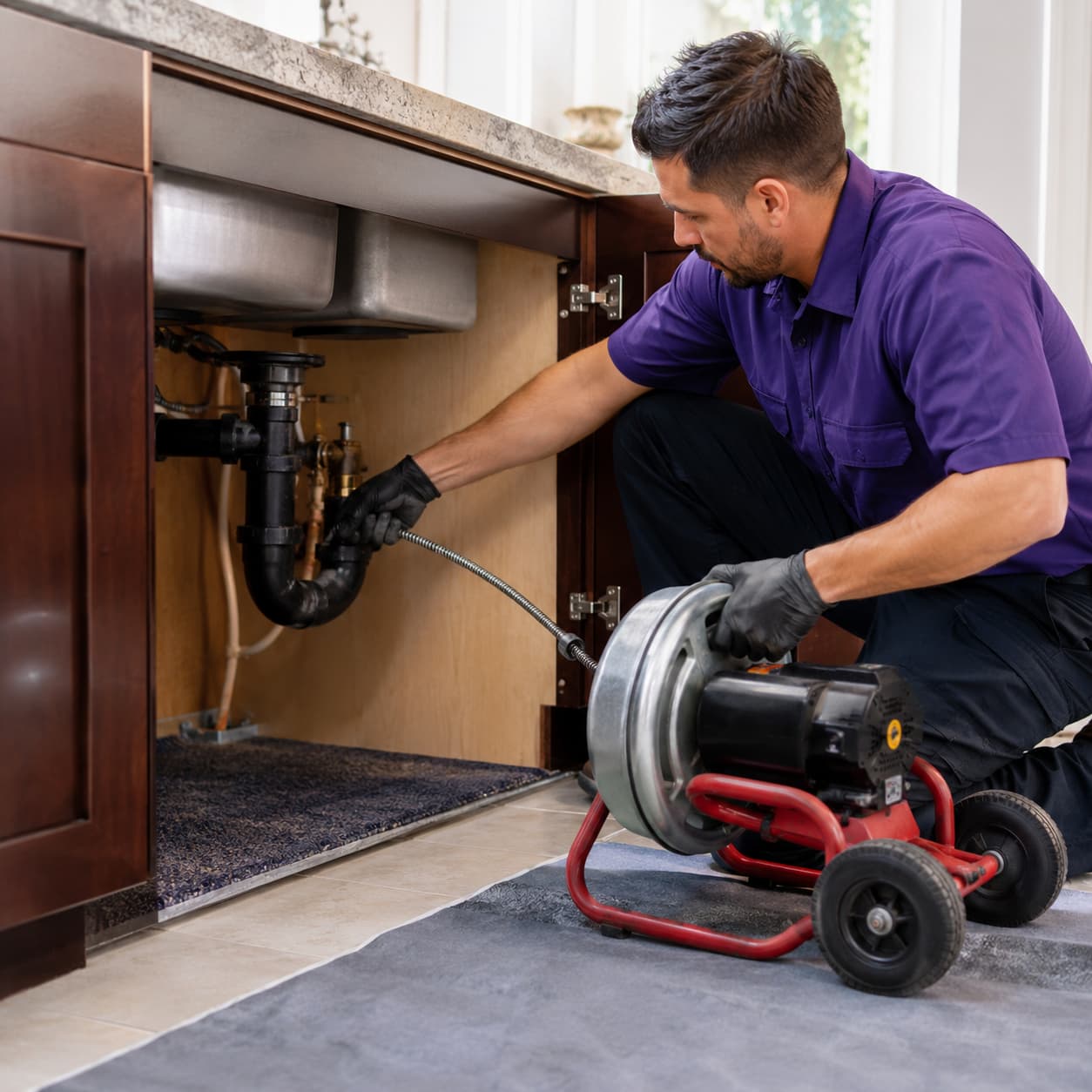
Our team snakes the drain line, runs and tests the disposal, and recommends hydro jetting when grease buildup has hardened deep inside the pipe. We also check the P-trap, which often holds the clog and is easy to clean without major work.
Bathroom sink drains clog when a mix of hair, toothpaste, soap scum, and skin cells binds together inside the pipe. Over time, the buildup creates a sticky layer that slows the water and traps bacteria, which leads to bad smells coming up from the drain.
Our team clears the pop-up stopper assembly, snakes the line to the trap, and cleans the P-trap when residue cannot be flushed out. We also check the overflow path to make sure nothing is blocking the secondary drainage.
Shower and bathtub drains collect hair, soap scum, body oils, and dead skin cells, which combine to form thick blockages inside the pipe. Sherman Oaks hard water adds to the problem by leaving mineral deposits that narrow the pipe further every year. The result is slow drainage and standing water during showers.
Our team removes the drain cover and strainer, snakes the line, and recommends hydro jetting for tubs that drain very slowly even after a basic cleaning. We also inspect the drain trap for cracks or improper installation.
Toilet clogs usually come from too much toilet paper, flushed wipes labeled “flushable,” sanitary products, or foreign objects dropped into the bowl. A plunger handles most light clogs, but recurring blockages often point to a deeper issue in the toilet trap, drain line, or main sewer.
Our team uses a closet auger to clear stubborn clogs that a plunger cannot reach. If the toilet keeps backing up after each clear, we run a camera inspection to find the real source of the problem.
Laundry drains handle lint, soap residue, fabric fibers, and small debris flushed out by the washing machine. Over time, this buildup narrows the standpipe and causes the washer to back up onto the floor during the drain cycle. Older Sherman Oaks homes often have undersized standpipes that clog faster than modern setups.
Our team snakes the laundry drain, clears the standpipe, and checks the connection between the washer hose and the drain for damage or improper fit.
Main sewer lines are the largest drains in your home and carry waste from every fixture to the city system. They also handle outdoor drains and yard runoff in some properties. Common issues include tree root intrusion, grease buildup from years of kitchen drainage, mineral scale, and broken or shifted pipes due to ground movement or aging materials.
Our team runs a camera inspection to locate the exact source, hydro jets the line to clear stubborn buildup, and recommends trenchless sewer repair when the pipe itself is damaged. We also clear the outdoor patio and storm drains that back up during heavy rain.
Call (818) 855-1269 to schedule drain cleaning for any drain in your home.
Drains clog from grease, hair, soap scum, food waste, tree roots, flushed wipes, and hard water minerals that build up inside the pipes over time. Catching the cause early helps avoid major backups and water damage in your home.
Common causes of clogged drains in Sherman Oaks homes:
- Grease and cooking oil: Pour-down kitchen grease cools and hardens inside the pipe, slowly closing off the drain.
- Hair buildup: Hair binds with soap scum and body oils, forming dense clumps inside shower, tub, and bathroom sink drains.
- Soap scum: Soap leaves behind a sticky residue that clings to pipe walls and traps other debris as it passes through.
- Food waste: Coffee grounds, rice, pasta, and fibrous vegetables expand inside drain lines and resist normal water flow.
- Tree root intrusion: Roots seek out moisture and grow into small cracks in older sewer lines, then expand inside the pipe.
- Flushed wipes: Wipes labeled “flushable” do not break down like toilet paper and often clog pipes or catch on tree roots.
- Hard water minerals: Sherman Oaks water leaves calcium and mineral deposits that slowly narrow the inside of metal and copper pipes.
- Foreign objects: Small toys, jewelry, dental floss, and bottle caps that fall into a drain often lodge inside the trap or pipe bend.
- Damaged or shifted pipes: Older homes with original galvanized or clay pipes can develop cracks, sags, or breaks that catch debris and cause repeat clogs.
- Improper venting: A poorly vented drain creates suction issues that slow water flow and increase the chance of buildup.
Call (818) 855-1269 to diagnose and clear any clogged drain in your home.