ServiStar plumbing video inspection services include:
- Sewer line video inspections
- Drain line camera surveys
- Pre-purchase plumbing inspections
- Post-repair verification inspections
- Leak location identification
- Root intrusion detection
- Pipe condition assessments
- Recorded footage and reports
Schedule a sewer camera inspection at the first sign of drain backups, before purchasing a home, or as part of annual preventive maintenance for high-volume commercial waste lines.
Sewer camera inspections are required when homes show main line drainage failure, during real estate transactions, or as routine preventive maintenance for high-volume commercial waste lines.
Standard California home inspections exclude underground sewer laterals. A pre-purchase sewer scope scan inspects the private line from the house cleanout to the City of Los Angeles main tap, verifying whether the line is made of aging vitrified clay pipe (VCP), cast iron, or modern ABS plastic. HD video recordings allow buyers to request repair credits or seller concessions prior to escrow closing.
Commercial kitchens, multi-family units, and strip malls experience heavy fats, oils, and grease (FOG) loading. Scheduled sewer scopes identify grease wall accumulation, structural pipe sags, and joint separations early, preventing emergency health department shutdowns and tenant disruptions.
Underground sewer pipe failure produces distinct physical symptoms inside the home and across the surrounding property grounds:
- Simultaneous Multi-Fixture Backups: Toilets, showers, and sinks backing up together indicate an obstruction in the 4-inch or 6-inch main sewer lateral rather than a localized branch line clog.
- Structural Gurgling & Pressure Drops: Air trapped behind main line blockages forces sewer gas through toilet traps, causing bowl water levels to fluctuate and gurgle during washing machine or dishwasher discharge cycles.
- Sewer Gas Odors & Lawn Sinks: Hydrogen sulfide odors near drains or damp, hyper-green grass patches over the sewer alignment signal a cracked pipe leaking raw sewage into subterranean soil.
Don’t wait for a total pipe collapse. Call (818) 855 1269
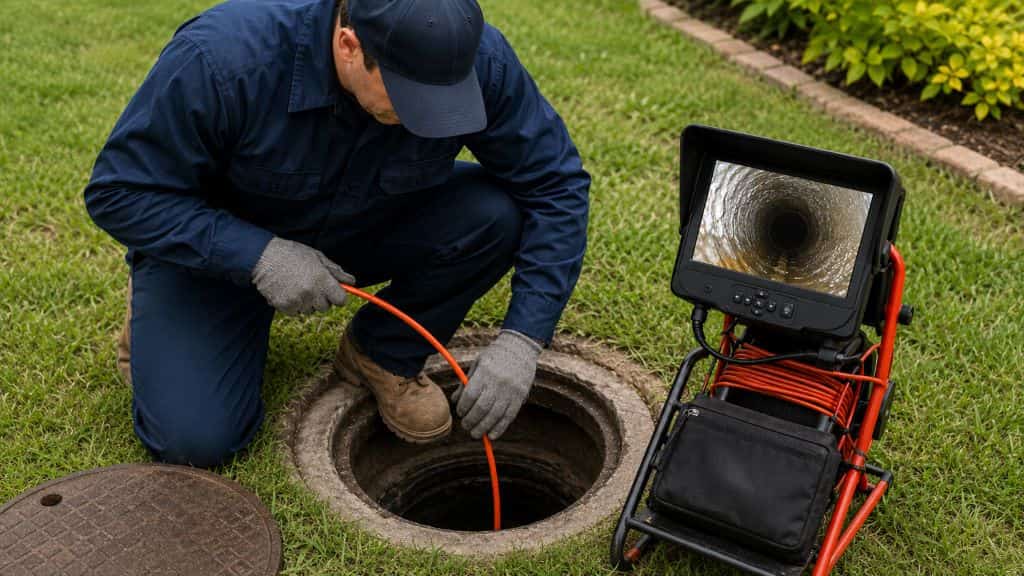
Waterproof fiber-optic push cameras equipped with high-intensity LED rings and 360-degree pan-and-tilt heads navigate underground sewer laterals to locate structural pipe failures, root intrusions, and severe blockages.
Tree roots from ficus, oak, or palm trees enter sewer lines through microscopic joint gaps and seam separations seeking moisture. Inside the pipe, root webs trap toilet paper and organic debris, quickly causing complete main line blockages and crushed pipe walls. High-definition camera scoping pinpoints exact root entry points and reveals whether roots have caused minor seam displacement or severe structural fracturing, determining if the line can be cleared with hydro jetting or if cured-in-place pipe (CIPP) lining is required.
A pipe belly is a sagging section of underground pipe caused by soil shifting, seismic activity, or poor ground compaction during initial trench backfilling. Because gravity-fed sewer laterals require a continuous downward slope, wastewater and sludge settle in these low spots, leading to chronic paper jams. During an inspection, the camera lens submerges underwater to confirm the sag, while an internal 512Hz sonde transmitter emits a signal mapped above ground with a digital locator to pinpoint the exact start, end, and depth of the belly.
Ground movement, heavy surface vehicle loads, and chemical decay cause underground sewer pipes to fracture or collapse. Aging cast-iron pipes suffer from internal bottom corrosion, known as channeling, that strips pipe floors thin, while vitrified clay pipes (VCP) develop shear cracks under soil pressure. Camera scans provide direct visual verification of remaining wall thickness and locate structural breaks, confirming whether localized spot repairs or full trenchless pipe bursting is necessary.
Offset pipe joints occur when earth movement or ground settling shifts adjacent pipe segments out of alignment. These displaced seams form sharp interior ledges that snag solid waste and paper, causing recurring main line clogs. Camera diagnostics measure the vertical lip displacement at the joint to evaluate whether a flexible structural liner can bridge the gap or if physical excavation is required.
Hardened cooking fats, oils, grease (FOG), mineral scale, and organic debris adhere to interior pipe walls over time, gradually narrowing the line’s internal diameter. In commercial kitchens and older residential cast-iron lines, this tuberculation restricts wastewater flow, causing slow drainage throughout the property. Scoping measures the exact thickness and hardness of the wall buildup, allowing plumbers to calibrate the correct cleaning pressure (PSI) and nozzle type for descaling or hydro jetting.
Call (818) 855 1269 for a pipe inspection