Trenchless sewer line installation uses no-dig methods to place a new sewer line with far less surface disruption than traditional trenching. ServiStar Plumbing and HVAC uses trenchless techniques to install replacement sewer lines through small access points, helping limit damage to landscaping, driveways, and hardscaping.
Sherman Oaks properties benefit from trenchless sewer work because preserving existing site features matters. Neighborhoods like Chandler Estates, Royal Woods, and Magnolia Woods often include mature landscaping, decorative hardscaping, and paved surfaces that are costly to disturb and restore. Trenchless methods allow sewer line work to be completed while keeping these property features largely intact.
Our licensed technicians begin each trenchless sewer line project with a detailed site evaluation. We review existing sewer conditions, depth requirements, connection points, and nearby property features to determine the most appropriate trenchless approach and plan the work carefully to reduce disruption.
Call (818) 855-1269 to discuss trenchless sewer line options for your Sherman Oaks property.
Trenchless sewer line installation makes sense when dealing with damaged pipes, limited access areas, sensitive landscaping, finished surfaces, or properties where minimizing disruption is a priority.
Below, we explore the situations that call for trenchless sewer line work using no-dig methods.
Severely Damaged Sewer Lines
Pipes affected by cracking, collapse, corrosion, or repeated failures may require replacement rather than repair. Trenchless methods allow a new sewer line to be installed through small access points instead of continuous trenching.
Limited Access Areas
Properties with tight access, narrow side yards, or restricted work areas benefit from trenchless approaches that avoid large excavation zones and heavy surface disruption.
Established Landscaping and Hardscaping
Homes and commercial properties with mature landscaping, decorative hardscaping, driveways, or paved surfaces are good candidates for trenchless work because it limits damage to existing features.
Commercial Properties With Ongoing Use
Businesses and multi-use properties often need sewer line work completed without blocking parking areas, walkways, or access points. Trenchless methods help reduce interference with daily operations.
Call (818) 855-1269 to discuss whether trenchless sewer line options are a good fit for your property.
Common trenchless sewer installation methods include pipe bursting and cured-in-place pipe lining (CIPP).
Below are the trenchless methods commonly used in sewer projects throughout areas like Sherman Oaks.
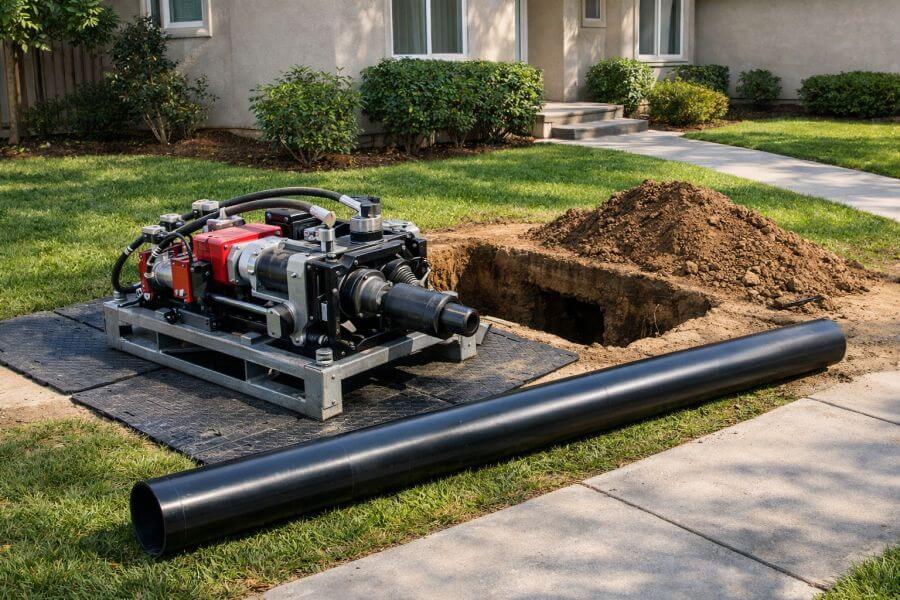
Pipe bursting is a trenchless method used when an existing sewer line needs to be replaced. The process involves breaking apart the old pipe while simultaneously pulling a new pipe into place along the same path. This approach allows a new sewer line to be installed without continuous excavation.
A seamless HDPE (high-density polyethylene) pipe is often used during pipe bursting because it creates a continuous, jointless run. This type of pipe is designed to handle wastewater flow efficiently and tolerate minor ground movement while reducing future intrusion from roots.
CIPP lining is a trenchless method commonly used to restore the interior of an existing sewer pipe rather than replacing it entirely. A resin-impregnated liner is inserted into the damaged pipe and cured in place, forming a new inner wall.
This method is typically used when the pipe structure is still intact but affected by cracks, leaks, corrosion, or root intrusion. CIPP lining is widely used in residential, commercial, and municipal sewer systems as a way to extend pipe life without excavation.
If you want to know which trenchless method is appropriate for a specific sewer line condition or property layout, call (818) 855-1269 to discuss available options and next steps.
Our trenchless sewer installation process begins with a detailed site assessment and planning, followed by access point preparation and sewer line installation. Next, we complete system connections, perform testing and inspections, and restore access areas to limit surface disruption.
Below is a step-by-step overview of how we complete trenchless sewer installations, from evaluation through final restoration.
We begin by evaluating the property and reviewing existing sewer conditions. Our team identifies connection points, reviews depth requirements, locates existing utilities, and notes nearby landscaping or hardscaping that may need protection during the installation.
Based on our assessment, we plan the trenchless approach and prepare the installation strategy. This includes selecting the appropriate trenchless method, determining access point locations, and organizing the work sequence to reduce surface disruption.
When permits or inspections are required, we coordinate the necessary steps to help ensure the work aligns with local code requirements. We schedule inspections as needed and confirm compliance throughout the installation process.
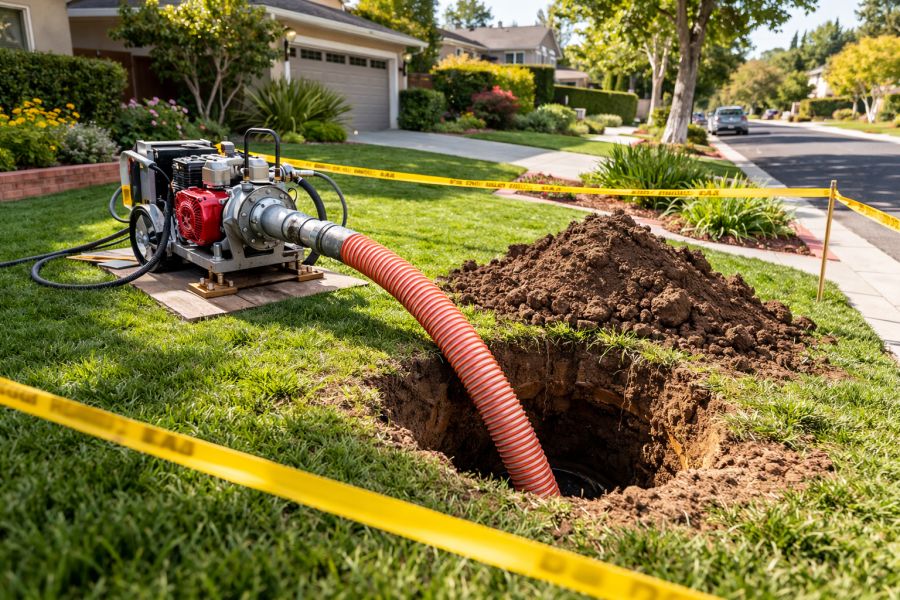
We prepare small entry and exit points instead of digging continuous trenches. Our team places these access points strategically to allow equipment access while keeping excavation limited.
Using the selected trenchless method, we install the sewer line along the planned path. During installation, we focus on proper alignment, secure connections, and maintaining correct flow characteristics for reliable system performance.
After installation, we connect the sewer line to the appropriate system components. We then perform testing, which may include flow checks and camera inspection, to confirm proper installation and operation.
Once testing is complete, we restore access points to match surrounding surfaces as closely as possible. Because trenchless methods limit excavation, restoration typically involves only small areas rather than full yard or driveway replacement.
Call (818) 855-1269 to discuss the trenchless sewer installation process and next steps for your property.