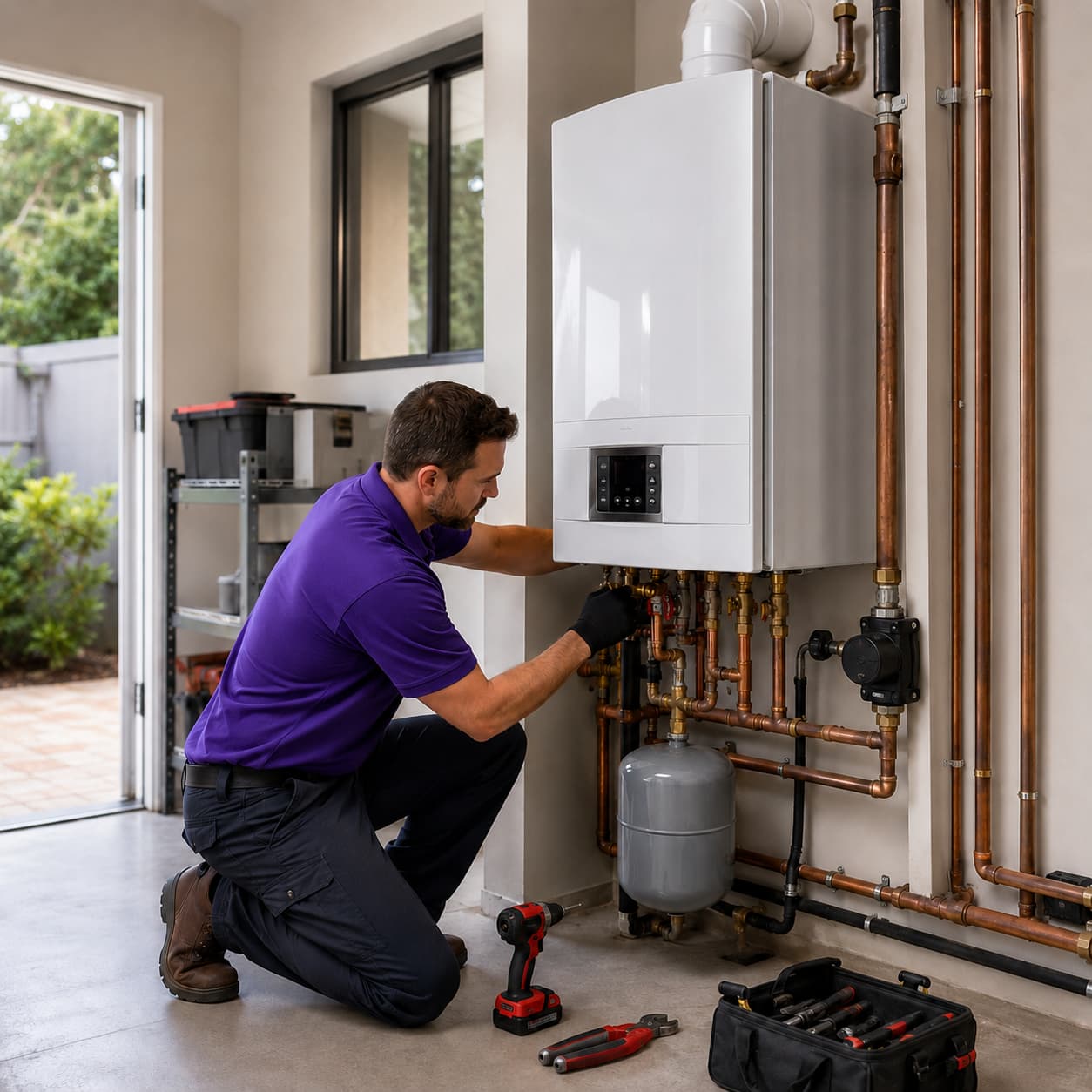
A boiler rarely quits all at once. It warns you first. Watch for heat that takes far longer to come up than it used to, rooms that never reach temperature, rusty water or staining around the base, a unit that clicks on and off in short bursts, or banging and rumbling when it fires. Rising gas usage with no change in the weather is another quiet sign the unit is losing efficiency.
A well maintained boiler typically lasts 15 to 20 years. When a unit is inside that window and the repair is small, a repair is usually the right call. When the boiler is near the end of that range, the repairs are stacking up, or a single fix costs a large share of what a new unit would, replacement is almost always the better money over the next decade.
We test the part that actually failed instead of guessing, show you what we found, and give you the boiler repair price before we turn a wrench. If replacement is the smarter move, we say so and explain why. No hidden fees, no surprise charges, no unnecessary upsells.
A boiler that is too small never keeps up on a cold canyon morning. One that is too big short cycles, wears out early, and wastes fuel. Sizing a boiler is not a guess off the square footage. Copying the number stamped on the old unit does not work either, since that one may have been wrong from the start.
We run a full heat load calculation. That accounts for the size of the home, ceiling height, window area, insulation, how many zones you want, and the type of radiators or radiant loops the boiler has to feed. Most homes land somewhere between 30 and 60 BTU per square foot, but the heat load calculation is what sets the real number for your house.
Larger Studio City estates add another layer. A guest house, an ADU, or extra bathrooms raise the demand, and some homeowners want the same system to carry domestic hot water or tie into pool and spa heating through a heat exchanger. We size for the whole picture so one properly matched system covers it rather than a unit that is stretched thin.
Boiler installation in Studio City requires a permit from the Los Angeles Department of Building and Safety, known as LADBS, to comply with the California Plumbing Code and Title 24 energy rules. We handle the permit and the inspection so the work is on record and done to code. SoCalGas supplies the natural gas, LADWP supplies your water and electricity, and we keep those responsibilities straight during the job.
Venting is one of the trickier parts in a hillside home. A high efficiency condensing boiler vents through PVC and can often run out a side wall, which gives us options when roof and exterior wall access is limited. A standard boiler needs a proper flue with the right rise and clearances. We plan the vent route before we install anything so it runs safe and legal, and you are not fighting with it down the road.
Gas supply matters here too. Older units draw more gas, and some canyon streets have older or smaller gas mains, so we confirm the line feeding the house is sized to carry the new boiler and upgrade the run when it is not. On lots set well back from the street where gas access is a real constraint, propane can be part of the conversation. Older hillside foundations can also bring seismic bracing and clearance requirements into the install, and we build the work to meet current code.
We install all major boiler brands and every common fuel type, so the choice comes down to your home and how you want it to run.
Standard boilers are generally 80 to 85 percent efficient. They are proven, straightforward, and often the practical fit when the existing venting and setup suit them. High efficiency condensing boilers reach 90 to 97 percent efficiency by pulling extra heat out of the exhaust before it leaves the house, which lowers fuel use over the life of the unit. Combination boilers, often called combi units, heat your home and produce domestic hot water on demand from one wall mounted appliance, which appeals to homes tight on mechanical space.
Gas is the most common fuel around Studio City. Electric boilers suit smaller or specific applications, and oil fired systems still exist on some properties. We walk you through what each option costs to run and what it means for your particular home before anything is ordered.