


Trenchless Sewer Line Replacement in Studio City, CA
What Trenchless Sewer Line Replacement Means for Studio City Homes
Trenchless sewer line replacement rebuilds the buried sewer main that carries wastewater from your house out to the city sewer connection, and it does that through small access points instead of one long open trench. This service covers the outside main line. That is the pipe that runs from your home across your property to where it ties into the public sewer. It is not interior repiping and it is not the small branch lines under your bathrooms.
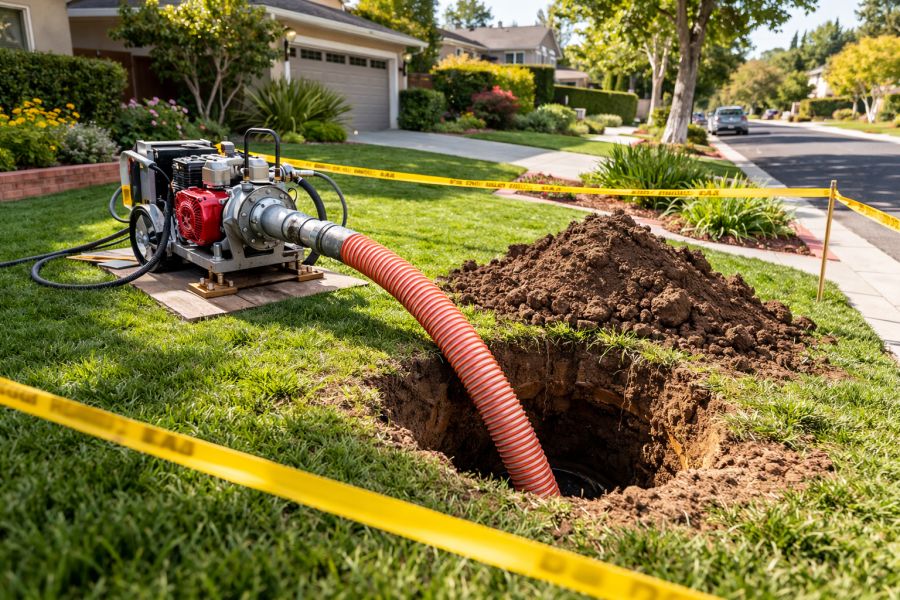
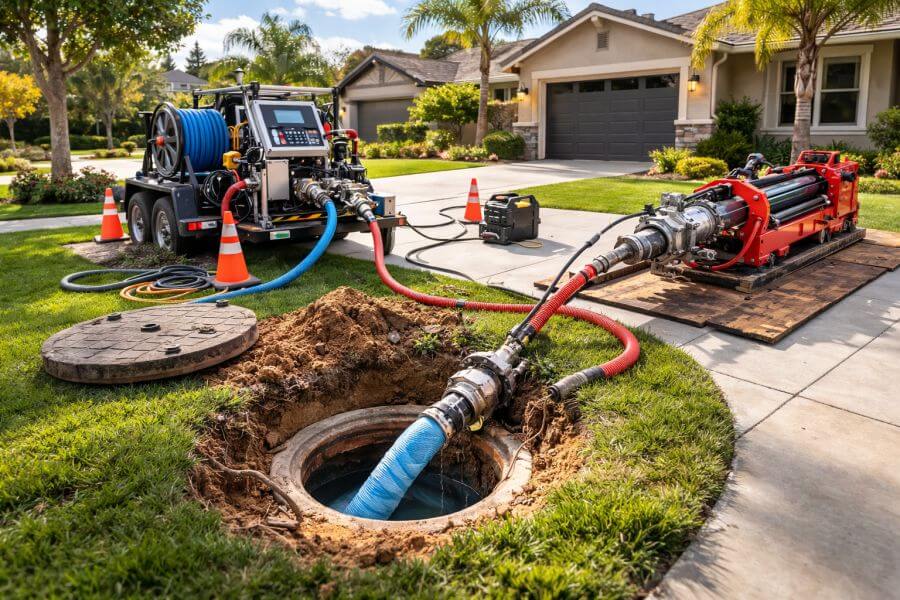
Two methods do this work, and we use whichever one fits the pipe you already have. Pipe bursting installs a brand new pipe along the existing path. Cured in place lining rebuilds the inside wall of the pipe you already own. Both leave the surface above the pipe far more intact than the older method of digging a trench the full length of the run.
Many Studio City homes were built in the 1940s and 1950s, and a good number still drain through original clay or cast iron sewer mains. Those older pipes crack at the joints and sag into low spots where waste sits, and roots find their way in. Trenchless replacement gives you a modern pipe without the weeks of tear out an older postwar lot would otherwise face.
Pipe Bursting vs Cured in Place Lining, and Which Sewer Method Fits Your Home
Pipe bursting pulls a bursting head through the damaged pipe. The head breaks the old pipe apart and out into the surrounding soil while a new HDPE pipe follows right behind it along the same path. HDPE stands for high density polyethylene. It is a jointless pipe, so it removes the seams where roots most often work their way in. Pipe bursting also lets us hold or even increase the pipe diameter, which matters on a main that was undersized to begin with.
Cured in place pipe lining, often shortened to CIPP, works differently. We insert a liner soaked in resin into the existing pipe and cure it in place so it hardens into a smooth new wall inside the old one. Because it forms inside the host pipe, lining needs the existing pipe to still hold its shape well enough to carry the liner.
Choosing between the two comes down to the pipe in the ground. We look at what the pipe is made of and how far it has failed, whether you need a larger diameter than you have now, how many joints have shifted apart, the bends and turns the line takes, and how deep the pipe sits. A fully collapsed or badly offset main usually points to pipe bursting, since lining needs a continuous path to travel through. A pipe that is cracked and root fouled but still round and continuous is often a good candidate for lining. We run a camera first, then tell you which method the pipe actually calls for and why.
Protecting Steep Driveways and Mature Landscaping During Trenchless Sewer Replacement in Fryman Canyon and Longridge Estates
The estate lots in Fryman Canyon Estates and Longridge Estates are exactly where trenchless earns its keep. These properties have specimen trees, stone retaining walls, pools, built up hardscape, and irrigation that took years and real money to put in. A traditional dig would cut a trench straight through all of it and then hand you a second bill to put the yard back together.
Trenchless limits the work to a small entry point and a small exit point. That keeps a mature tree’s root system intact and leaves buried irrigation lines alone along most of the run. It also spares the retaining walls and hardscape that give these canyon and hillside homes their value. On a lot where the sewer main runs under a paved driveway or patio, the new pipe goes in beneath those surfaces without breaking them open.
Signs Your Studio City Home Needs Sewer Main Replacement
A failing sewer main rarely announces itself with one dramatic event. It builds up over months. Watch for backups that keep coming back no matter how often the line is cleared. Several drains across the house might run slow at the same time, or a sewage smell might drift up in the yard. A bright green strip of grass or a soft wet patch that follows the line of the buried pipe often means wastewater is leaking into the soil below.
A toilet that gurgles when a tub drains is another sign. So are rodents getting in through a broken pipe, or roots that come out during a drain cleaning. When our camera shows a low spot that holds standing water, or cracked clay, or a joint that has separated, the pipe has usually reached the point where cleaning it again only buys a little time. That is the moment to talk about replacement rather than one more temporary clearing.
How No Dig Sewer Replacement Works on Hillside Lots
Hillside work in Studio City Hills, Wrightwood Estates, and The Donas has its own set of problems, and they are mostly about access and grade. Many of these homes sit at the top of a steep driveway with only one way in for equipment. We plan the staging around that before we arrive, so the truck and gear land where they can actually reach the line.
Grade is the other concern. Cutting a long open trench across a slope disturbs the soil that holds the hillside together and raises the risk of erosion near a foundation or a retaining wall. Trenchless keeps soil disturbance down to the access points, which is far gentler on a graded lot. We also keep our access points clear of retaining walls and slope structures so the pull path does not undermine anything that is holding back the hill.
Our Trenchless Sewer Replacement Process From Camera to Cleanup
We run every job the same way so you always know what happens next.
- Video camera inspection and assessment. We send a camera down the line, find the failure, measure the run, and confirm which method the pipe calls for.
- Site preparation and access points. We mark and open the small entry and exit points and protect the surfaces and plantings around them.
- Pipe bursting or lining execution. We install the new HDPE pipe by bursting, or we insert and cure the liner in place, along the existing path.
- Connection and testing. We tie the new pipe into your home and the city connection, then test the line to confirm it flows correctly.
- Access point restoration. We backfill and close the access points and leave the site clean.
Trenchless vs Traditional Dig, Sewer Replacement Cost and Time in Studio City Compared
A traditional open trench replacement on a hillside or estate lot can run many days and sometimes into weeks. You have to dig the full length of the run, do the pipe work, and then rebuild everything that came out on top. Trenchless work on a typical Studio City property is usually measured in days, not weeks.
The equipment behind trenchless costs more to run, so the pipe portion of the job can look higher at first glance. The full picture usually lands in trenchless favor once you add the restoration a dig would force on you. Rebuilding a torn out driveway and its retaining walls and landscaping is often the largest line on a traditional job, and trenchless mostly avoids it. We give free in person estimates with same day appointments when the schedule allows, and there is no upfront service charge to have us look. Our pricing follows one rule. No hidden fees, no surprise charges, no unnecessary upsells.
Permits and Access Points for Sewer Line Replacement in Studio City, CA
Sewer main replacement in Studio City is permitted work through the City of Los Angeles, and the job is inspected. Excavation and construction permits run through the Los Angeles Department of Building and Safety, and the sewer connection itself falls under the City’s engineering and sanitation authority. We pull the permits and handle the inspection so the new main is signed off correctly. One thing worth keeping straight on utilities is that LADWP supplies your water, while the sewer runs through a separate City system.
Access is its own planning step in these neighborhoods. Gated communities and narrow private hillside roads limit where and when equipment can move, and some canyon streets are tight enough that staging has to be worked out in advance. We plan around gate access and private road rules so the crew and gear arrive without holding up your schedule.
Why Studio City Homeowners Choose ServiStar for Trenchless Sewer Replacement
ServiStar has been doing plumbing work around the San Fernando Valley for more than 30 years. We hold California Contractor’s License 885156, we are bonded and insured, and we are one of only four plumbing companies in Los Angeles named an LA Legacy Business. We answer the phone 24 hours a day, 7 days a week.
We also make the money side easy to plan for. We offer a 10 percent military discount, special pricing for senior homeowners, free in person estimates, and no upfront service charge to come out and look. We back the work with long term warranty coverage on the new pipe. On high value hillside homes, transparent and non inflated pricing is the whole point, and that is how we quote every job. Fast response. Expert service. Your neighbors.
Studio City Neighborhoods We Serve for Trenchless Sewer Replacement
We handle trenchless sewer work throughout Studio City, CA and the 91604 area. That includes the hillside and canyon lots in Fryman Canyon Estates, Longridge Estates, Studio City Hills, Wrightwood Estates, and The Donas, where steep driveways and mature landscaping make no dig methods the sensible choice. We also serve the flatland pockets in Colfax Meadows, Silver Triangle, Beeman Park, and Footbridge Square, and the homes around Tujunga Village and the corridors along Ventura Boulevard and Laurel Canyon Boulevard.
Our Complete Trenchless Replacement Services
Our trenchless sewer line replacement services include inspection, pipe replacement, testing, and restoration. These plumbing services cover the full replacement process from evaluation through completion.
Our trenchless sewer line replacement services include:
- Pre-inspection video camera surveys for planning and verification
- Pipe bursting used to replace damaged sewer lines
- Seamless HDPE pipe installation along the existing pathway
- Small access points instead of continuous excavation
- Same-day or next-day completion when conditions allow
- Property restoration coordination after installation
- Post-installation testing to confirm proper operation
- Long-term warranty coverage for added peace of mind
Trenchless Sewer Replacement FAQ for Studio City Homeowners
Yes. Trenchless works well beneath driveways and other finished surfaces, and it is often the better choice on a steep single approach lot. We plan the equipment staging around the driveway before we start, keep access points away from retaining walls, and install the new main without cutting a trench down the length of the drive.
Trenchless limits the work to small access points rather than a full length trench, so it leaves most of the yard alone. Established root systems, buried irrigation lines, hardscape, and stone walls along the run stay in place because we are not opening the ground above the whole pipe.
We run a camera down the line first. Then we weigh the pipe material and condition, whether you need a larger diameter, how many offset joints and bends the line has, and how deep it sits. A collapsed or badly offset main usually points to pipe bursting, while a cracked but continuous and still round pipe is often a good candidate for lining.
No. The method only needs a small entry point and a small exit point instead of a trench running the full length of the pipe. The surfaces and plantings in between stay intact.
Most trenchless jobs are measured in days rather than the weeks a traditional dig and rebuild can take on a hillside or estate lot. How long it takes depends on the run, the depth, and how easy the lot is to reach, and we give you a timeline with your estimate.
Yes. We plan around gate access and narrow private road limits ahead of time so the crew and equipment can reach the line and stage safely without delaying the schedule.
Sewer main replacement is permitted and inspected work through the City of Los Angeles. Excavation and construction permits go through the Los Angeles Department of Building and Safety, and the sewer connection falls under the City's engineering and sanitation authority. We pull the permits and handle the inspection.
The equipment makes the pipe portion cost more at first glance, but the full project often compares favorably once you add restoration. A traditional dig forces you to rebuild the driveway, walls, and landscaping it tore out, and trenchless mostly avoids that expense. We give a free in person estimate with no upfront service charge.
Often yes, and the answer guides which method we use. Pipe bursting handles offset and separated joints well because it pulls a new pipe along the path and can hold or increase diameter. Lining needs a more continuous path, so heavily offset lines usually lean toward bursting. The camera inspection tells us which one your pipe can accept.
A single localized problem in an otherwise sound pipe can sometimes be repaired. When the camera shows widespread cracking, a low spot that holds waste, separated joints, or roots through much of the run, replacement is the lasting fix. We show you the camera footage and explain what we found before you decide.
The outside main line, also called the lateral in many homes, is the buried pipe that carries all your wastewater from the house across your property to the public sewer connection. That is the pipe this service replaces. It is separate from the interior drain branches inside your walls.
HDPE pipe is jointless and resists the root intrusion and joint failures that ended the life of the old clay or cast iron main. It is built to last for decades, and we back the installation with long term warranty coverage.